Archiving and digital exhibition
Digitization of stored works, virtual exhibition, online 3D catalog. Sketchfab, Apple AR Quick Look (USDZ) compatible.
Textured 3D restitution for UNESCO heritage, urban archaeology, judicial expertise and audiovisual production. 8K texture, 1 mm resolution on objects.
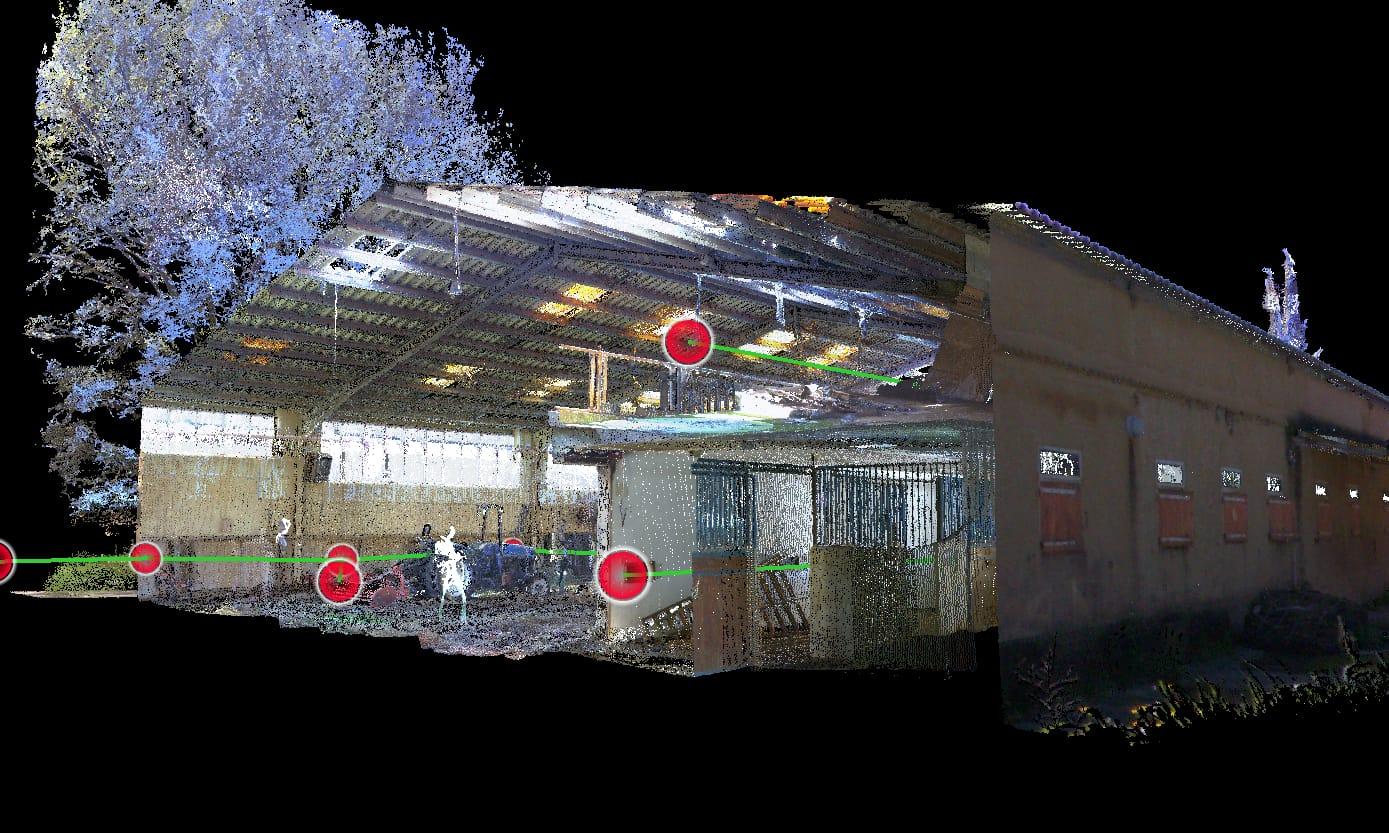
Photogrammetry is the oldest 3D capture method — Aimé Laussedat invented it in 1850 for military mapping — but it is today revolutionized by SfM (Structure-from-Motion) algorithms and massive GPU computation. It consists of reconstructing a 3D geometry and its texture from a set of photographs taken at different angles with overlap.
Where the laser scanner excels in geometric accuracy but provides limited native texture, photogrammetry produces high-resolution texture, faithful to human perception. On a heritage object, a statue, a fresco, a facade ornament, photogrammetry becomes the reference tool — 8K texture, sub-millimetric resolution on fine detail.
ARPEO combines a high-resolution DSLR (45 MP), fixed lenses for heritage photography, the DJI Matrice 4E drone for high views, and the Reality Capture software chain for processing. On a complex subject, laser scan and photogrammetry are combined: the laser produces reference geometry, photogrammetry projects the texture.
Mobilization within 5 working days in PACA. Acquisition duration highly variable by scale: 2 h for a statue, 1 day for a facade, 3 to 5 days for a full monument. Contractual delivery lead time 15 days for a standard subject, up to 30 days for a large heritage site.
High-resolution photography, drone and SfM processing chain.
Five steps for museum-quality results.
Conservator, heritage architect, archaeologist or set designer: definition of target resolution, delivery format, end use (archiving, exhibition, 3D web, AR, video game).
Per scale: DSLR + macro lenses for ornaments and statues, drone for high and overall views. 50 to 5,000 photos per subject. Homogeneous-light conditions mandatory.
Aerotriangulation, dense matching, mesh generation, 8K texture projection. Manual cleanup of artifacts (mobile furniture, occupants, hidden parts).
Mesh optimized for end use: high density for archiving (50M triangles), reduced for 3D web (< 200 k triangles). UV-mapping for texture.
Textured OBJ/FBX/USDZ mesh for museum, GLTF/GLB for Sketchfab, 4K turn-around video, high-resolution HD views.
Six sectors where high-resolution photogrammetry is the right tool.
Digitization of stored works, virtual exhibition, online 3D catalog. Sketchfab, Apple AR Quick Look (USDZ) compatible.
High-resolution textured archiving before restoration. DRAC, UNESCO, Historic Monument classification application files.
Chronological restitution of excavation layers before backfill. Compatible with INRAP archaeological databases.
Damage, claim, defect. Time-stamped textured mesh for contentious use. Comparable to scientific photography admissible in court.
Textured 3D models for digital sets, video games (Unreal Engine, Unity), theatrical scenography. USDZ/FBX format ready to integrate.
Mechanical parts, prototypes, industrial sculpture. Comparative metrology between photogrammetry and original CAD.
Chosen based on your end use.
| Format | Usage | Size |
|---|---|---|
| OBJ + MTL + PNG textures Universal 3D format, read by all software | Universal 3D format, read by all software | 500 MB to 50 GB |
| FBX Animation, video games, audiovisual (Maya, Unreal Engine, Unity) | Animation, video games, audiovisual (Maya, Unreal Engine, Unity) | 200 MB to 20 GB |
| GLTF / GLB 3D web, Sketchfab, three.js (optimized < 200 MB) | 3D web, Sketchfab, three.js (optimized < 200 MB) | 50 to 200 MB |
| USDZ Apple AR Quick Look, iOS augmented reality | Apple AR Quick Look, iOS augmented reality | 20 to 200 MB |
| PLY Open point cloud format, scientific archiving | Open point cloud format, scientific archiving | 1 to 50 GB |
| 4K turn-around video Client presentation, communication, exhibition | Client presentation, communication, exhibition | 500 MB to 5 GB |
Best practices and documentary standards.
ICOM guide for 3D digitization of museum collections — resolution, metadata, archiving.
Mesh exportable to IFC for heritage BIM integration.
Open 3D web format, PBR (Physically Based Rendering) metadata.
iOS AR Quick Look format, optimized for mobile.
Pricing by subject scale and target resolution.
Photogrammetry is our heritage specialty in PACA.
Laser scanning is active (laser distance measurement): ±2 mm geometric accuracy, limited texture. Photogrammetry is passive (reconstruction from photos): ±5 mm geometric accuracy, high-resolution 8K texture. On a heritage object, photogrammetry is often preferred. On an industrial building, the scanner. Often we combine both.
Indicative: 1.5 m statue = 80 to 200 photos. 100 m² facade = 200 to 500 photos. Full monument (cathedral, palace) = 1,000 to 10,000 photos, drone + terrestrial combined.
Yes. GLTF 2.0 export (gltf-pipeline + draco compression) optimized for the web — mesh reduced to < 200 MB, 4K texture. Directly viewable in Sketchfab, three.js, Babylon.js, or in AR on iOS via USDZ.
Yes. We deliver files matching DRAC expectations: archivable high-resolution mesh, 8K texture, full photogrammetric metadata, Lambert-93 georeferencing. Compatible with classification or supplementary inscription applications.
Homogeneous diffuse light mandatory (hard shadows = texture artifacts). Ideal: overcast sky or half-shadow light. On a site exposed to direct sun, shoot at the start or end of day to avoid harsh contrasts.
Yes. Statue placed on a turntable with uniform background (white or chroma green). Multiple shooting heights (3 to 5 levels). Plan 200 to 500 photos for a 50 cm to 1.5 m statue. Studio acquisition: 2 to 4 hours.
Mobilization within 5 working days. Contractual delivery in 15 days.